Asphalt-to-concrete conversion in Cleveland:Replace worn asphalt with a concrete driveway.
Cleveland Concrete Driveway Services helps homeowners plan asphalt-to-concrete driveway conversion in Cleveland. Replace worn asphalt with a concrete driveway that fits your vehicles and garage access. Conversion removes the existing pavement so the ground beneath it can be assessed before the new surface is built.
Keeping the same footprint is one option; adding parking space may be part of the project too. The plan needs to address base preparation, drainage and connections to nearby surfaces. Describe your asphalt’s condition and any layout changes when you request an estimate.
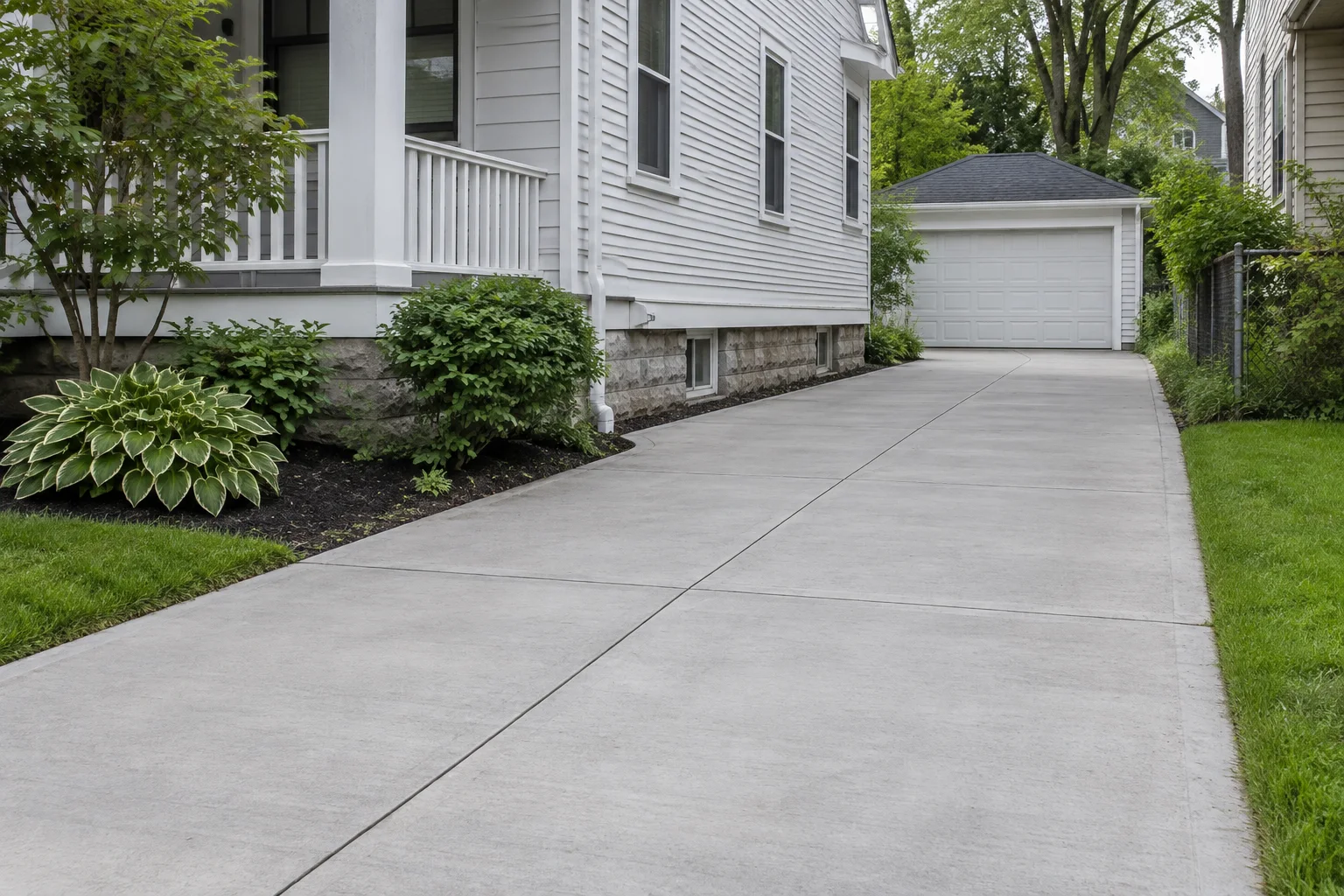
Illustrative driveway image, not a completed customer project.
What changes when asphalt becomes concrete
The existing pavement provides a starting layout, not a finished concrete specification.
Asphalt removal and disposal
The conversion described here removes the asphalt within the agreed driveway boundary. Removal gives access to the supporting layers and creates room for the proposed concrete construction. Identify the limits at the apron, garage and nearby walks before demolition. The estimate should include loading, hauling and disposal of the removed pavement. If only part of the asphalt area is being converted, the plan needs a clear edge detail where the two surfaces will meet.
Retained base or new preparation
Existing base material can only be included as retained work after its suitability is assessed. Weak areas, uneven support and unsuitable levels may require removal or additional preparation. A proposal should state what the initial price assumes about the base and what happens if demolition exposes a different condition. This keeps the conversion from relying on an unseen layer merely because the asphalt once supported cars. The final preparation must suit the agreed concrete slab.
Concrete levels, joints and finish
Concrete brings a different layout of slab panels and joints to the driveway. The plan should locate those joints around the footprint and connections rather than trying to reproduce the asphalt surface without changes. Finished levels need to work at the garage, street approach and retained walks. Choose the surface finish together with those construction details. A widening or parking extension changes the measured area, so include it in the conversion layout before preparing the concrete estimate.
The conversion sequence
Assess the asphalt and desired layout
Begin with rutting, damaged edges, drainage and the surfaces beside the driveway. Decide whether the conversion keeps the existing footprint or changes the parking area. The estimate should make that choice visible along with the assumptions about the material below the asphalt.
Expose and prepare the support
Removal allows the underlying material to be examined and the grade to be set for concrete. Agree on any additional base repairs before they proceed. Complete the planned preparation and forms around fixed entrances, then confirm the concrete specification and joint layout.
Place concrete and manage vehicle return
The concrete is placed and finished on the prepared footprint. The owner needs a new curing and access schedule for this material. Previous habits for using an asphalt drive do not establish when the fresh concrete can carry vehicles; follow the written project instructions.
Make the conversion assumptions explicit
A useful conversion bid separates asphalt removal from the concrete work and identifies the base it expects to retain. It also describes the finished height at existing entrances, the joint plan and any footprint changes. Without those details, two prices may assume different groundwork or removal limits. Record what is confirmed on the first visit and what will be checked after demolition so additional preparation has a clear approval route.
Asphalt-to-concrete conversion in Cleveland FAQs
Is this a concrete overlay on top of asphalt?+
No. This service page describes removing the asphalt and preparing the support for a new concrete driveway. A proposed overlay is a different construction approach and needs its own assessment and specification.
Can the old asphalt base be reused?+
Some base material may be retained if assessment establishes that it suits the new construction. Its presence alone is not enough. The scope should identify what is retained, what is repaired and what remains to be checked after removal.
Can I widen the driveway during conversion?+
Yes, the proposed conversion can include a wider footprint. The new area needs its own ground preparation and affects layout, drainage and local review. Include the added parking space when describing the request.
Will conversion keep the same driveway height?+
The finished level needs to be planned around the garage, walks and street connection. It may differ from the worn asphalt surface. Establish those elevations during planning instead of assuming the new material will meet every edge at its old height.
Related work for this project
These services cover adjoining work or a different construction approach worth discussing with this request.