Driveway base preparation and drainage in Cleveland:Plan firm support and a clear route for water.
Cleveland Concrete Driveway Services covers base preparation and surface drainage within concrete driveway projects in Cleveland. Settled panels and recurring puddles can point to problems beneath the slab or with the surface slope. Addressing those conditions belongs in the plan for your new driveway.
Ground preparation supports the concrete, while finished levels guide water away from problem areas. The garage, nearby walks and available drainage outlet all affect that layout. Tell us where water collects, which panels have moved and whether water reaches the garage when requesting an estimate.
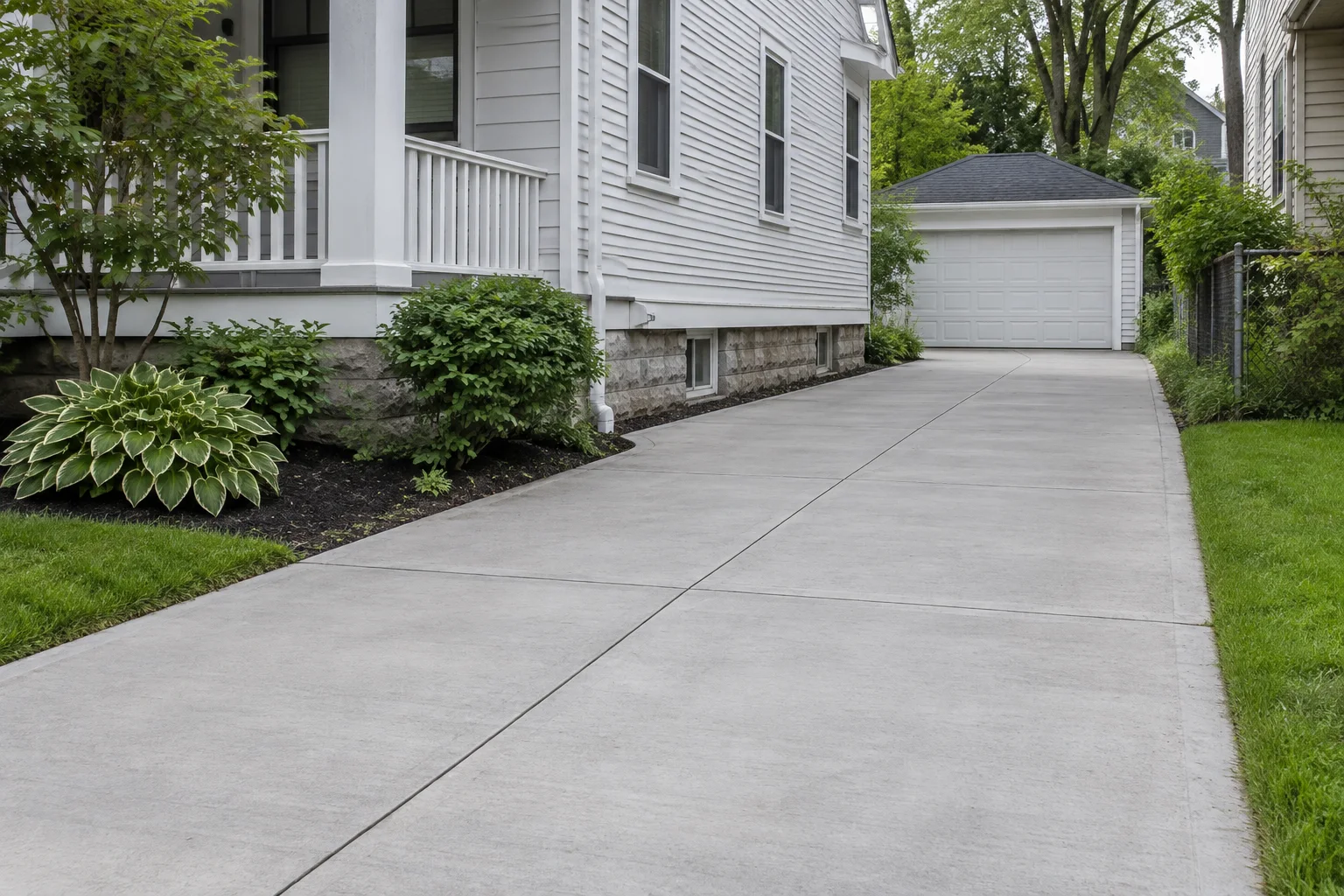
Illustrative driveway image, not a completed customer project.
Connect ground support with finished grades
The prepared base and surface-water route both belong in the driveway specification.
Ground assessment after removal
An existing slab can hide soft ground, buried material and uneven support. Removal exposes those conditions so the contractor can assess the preparation needed for the new construction. The estimate should distinguish the work included at the first visit from repairs that depend on what is found. Keep the approval method clear before excavation begins. That allows an exposed problem to be documented and resolved rather than covered by the new driveway or treated as an unexplained extra.
Prepared ground and compacted stone
Base preparation creates the support layer beneath the concrete. Its material and depth should follow the site conditions and planned slab, with unsuitable areas addressed before the forms are ready for placement. A written specification should explain the preparation included instead of using “base work” as an undefined allowance. Keep excavation and replaced material measurable where possible. The owner should be able to understand what is being built below the slab even though that layer will no longer be visible.
Surface-water direction and outlet
Finished grades guide water across the driveway, but the intended destination needs to be checked too. Garage thresholds, retained walks and the street approach can limit the available slope. Identify low areas and the proposed outlet during planning, and confirm any design or approval questions before placement. This page covers drainage coordination within the driveway project. A trench drain, buried pipe or sewer connection is additional work that needs its own confirmed scope rather than an assumed part of a concrete pour.
Resolve support and drainage before concrete
Locate settlement and standing water
Start with the driveway’s damaged panels, puddles and nearby entrances. Document where the water comes from and where the planned surface would direct it. The first assessment establishes the visible conditions and the questions that removal or excavation must resolve.
Expose, assess and prepare the ground
After pavement removal or excavation, inspect the supporting material and agree on any extra repairs. Complete the specified base work and set the proposed grades. Check those levels against the retained garage, walk and frontage connections before the slab is placed.
Confirm the finished water route
The concrete layout should follow the agreed grade and outlet plan. Review the completed surface and connections as part of handover, with any additional drainage work identified separately. Keep the construction specification and documented changes with the curing and access instructions.
Make hidden work and outlet decisions visible
A base-and-drainage scope needs an explanation of the support preparation, planned finished grades and unresolved ground conditions. It should establish how concealed repairs are approved and whether any drainage hardware is included. A new surface alone does not explain how a settled area was rebuilt or where a recurring puddle will drain. Written details make those decisions part of the driveway project rather than assumptions beneath it.
Driveway base preparation and drainage in Cleveland FAQs
Will new concrete by itself fix standing water?+
Not necessarily. The finished grade, adjoining levels and available outlet need assessment. Replacing the material without changing the condition that creates a low area may leave the drainage problem unresolved.
Can all base repairs be priced before removal?+
Some conditions remain concealed until the slab or existing pavement is removed. The estimate should identify its assumptions and the method for approving additional excavation or base repairs once the ground can be assessed.
Does this include a trench drain or buried pipe?+
Only if that work is explicitly designed and included in the proposal. Surface grading and base preparation do not automatically include piped drainage or a sewer connection. Those additions need their own confirmed scope and applicable review.
Can I request general yard drainage from this page?+
This page concerns support and drainage within a concrete driveway project. It does not establish a general yard-drainage service. Describe how the water affects the driveway, garage or adjoining connections when sending the inquiry.
Related work for this project
These services cover adjoining work or a different construction approach worth discussing with this request.